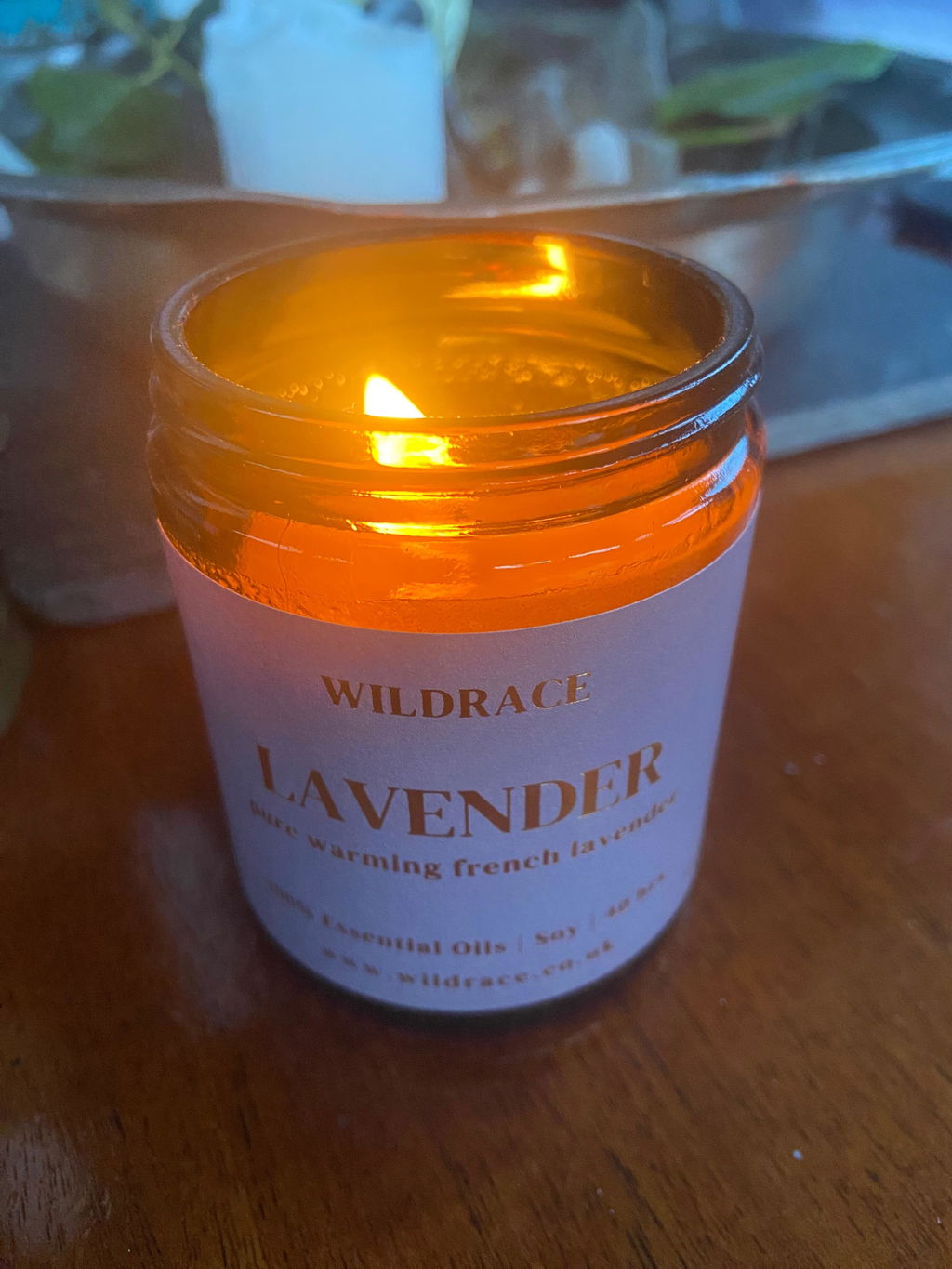
"Non-toxic candles."
It's one of the biggest search terms in the candle industry.
Thousands of people search for it every month, hoping to find a safer candle for their home, children or pets.
Here's the problem.
From a scientific perspective, there is no recognised definition of a "non-toxic candle". That might surprise you, especially when so many candle brands proudly advertise themselves as exactly that.
At WILDRACE, we've deliberately chosen not to market our candles as "non-toxic". Not because we don't care about the ingredients we use, but because we care too much about honesty to make a claim that simply isn't that straightforward.
Let's explain why.
First things first. Every candle burns.
It sounds obvious, but it's something many brands conveniently skip over.
A candle works by creating a controlled flame. That flame melts wax, draws it up through the wick and burns it to produce heat, light and fragrance.
That burning process is called combustion.
Every combustion process creates emissions. Whether it's a wood fire, a gas hob, a scented candle or a birthday candle, combustion creates by-products. That doesn't automatically make something dangerous, but it does mean that describing any burning candle as completely "non-toxic" isn't scientifically accurate.

🚨 Myth vs Fact
Myth: Soy candles are non-toxic.
Fact: Burning any candle creates combustion by-products. Soy wax may have environmental and performance benefits compared with paraffin wax, but burning soy wax doesn't magically eliminate emissions.
Myth: If a candle says "natural", it must be safer.
Fact: "Natural" isn't a guarantee of safety. Many naturally occurring substances can irritate the skin or respiratory system, while some synthetic ingredients have excellent safety profiles.
Myth: Essential oils can't contain allergens.
Fact: They absolutely can. Lavender, citrus oils, cinnamon and many other essential oils naturally contain allergens that must legally appear on candle safety labels.
So why does everyone use the term "non-toxic"?
Because people search for it.
It's as simple as that.
When most people type "non-toxic candles UK" into Google, they aren't looking for a chemistry lesson.
They're usually trying to avoid things like:
- Paraffin wax
- Added phthalates
- Heavy synthetic fragrances
- Poor quality candles
- Excessive soot
- Unknown ingredients
The phrase has become shorthand for "I want a better candle."
The trouble is, marketing has blurred the line between what people mean and what the science actually says.
Things Brands Hope You Never Google 👀
1. There isn't a legal definition of a "non-toxic candle"
You'll see the phrase everywhere.
But there isn't a recognised scientific standard that says exactly when a candle becomes "non-toxic."
That means different brands can interpret the phrase however they like.
___

2. Every burning candle produces emissions
No exceptions.
The amount and type can vary depending on factors like the wax, fragrance, wick, flame size and even how well you look after the candle.
But no candle produces absolutely nothing when it's burning.
3. "Chemical-free" is impossible
Everything is made of chemicals.
Water is a chemical.
Oxygen is a chemical.
Soy wax is made of chemicals.
The question isn't whether chemicals are present.
It's which chemicals are present, in what quantities and whether they're being used responsibly.
4. Essential oils aren't automatically "better"
This one catches people out.
Essential oils are wonderful ingredients and we use them throughout our Essential Oil Collection.
But they're also incredibly complex natural substances.
Many contain naturally occurring allergens like limonene, linalool and eugenol. These are completely natural, but they still have to be declared under UK regulations.
Natural doesn't automatically mean risk-free.
Synthetic doesn't automatically mean harmful.
Good formulation is what matters.
So what should you actually look for?
Instead of asking whether a candle is "non-toxic", I think there are much better questions.
Is the wax clearly stated?
A trustworthy company should tell you exactly what wax they're using and at what percentages.
Does the brand talk openly about ingredients?
Transparency is always a good sign.
If a company spends pages talking about being 'natural' but barely mentions what's inside the candle, I'd be asking questions.
Are fragrance oils responsibly selected?
At WILDRACE, we choose fragrance oils that are free from added phthalates and comply with IFRA standards.
That doesn't make them "non-toxic."
It means we've carefully selected ingredients that are non-hormone altering and safe for breathing in.
Is the company honest?
This is probably the biggest one.
I'd rather buy from a brand that explains the science honestly than one making sweeping claims that sound impressive but don't tell the full story.
Why WILDRACE won't call our candles "non-toxic"
Could we?
Probably.
Lots of companies do.
Would it help with SEO?
Almost certainly.
But I'd rather explain why we make our candles the way we do than rely on a marketing phrase that has no universally accepted scientific definition.
Instead, we'll happily tell you exactly what our candles are.
They're handcrafted in the UK.
They're made using 100% soy wax.
They're free from paraffin wax.
We don't use added phthalates in our fragrance oils.
They're non-hormone altering.
They're 100% plastic free.
We use cotton wicks.
We formulate our products to comply with UK regulations and IFRA standards.
Most importantly, we believe you deserve transparency instead of buzzwords.
The bottom line
If you've searched for "non-toxic candles UK", you're asking a good question.
You care about what you're bringing into your home.
So do we.
The answer just isn't as simple as many marketing campaigns would have you believe.
No burning candle is completely free from combustion by-products.
No single ingredient determines whether a candle is "safe."
And no marketing slogan should replace honest information.
At WILDRACE, we'd rather tell you exactly what's in our candles, exactly what isn't, and let you make an informed decision.
Because honesty shouldn't be a unique selling point.
It should be the standard.
Shop Honestly Clean Candles Here

Interested in this topic, read our other blog posts:
The Hidden Plastic's In Candles
Hormone Altering Candles - Industry Standard?
The hidden dangers in your candles and what most brands aren't telling you